
Why Good Roads Matter in Surface Mining
When you think about productivity and cost control in surface mining, your mind probably goes straight to haul trucks. But there’s one critical factor that often goes underappreciated, haul road quality.
Behind the scenes, road conditions influence nearly every aspect of mining performance, from fuel consumption to emissions. And at the center of it all is a concept many operations underestimate: rolling resistance.
Rolling Resistance: Subtle Differences Lead to Big Impacts
Roling resistance represents energy lost to friction between the truck and the road. For a diesel truck, that lost energy must be replaced by burning additional fuel, which directly increases CO₂ emissions.
In fact, every liter of diesel burned emits approximately 2.68 kg of CO₂, making even small inefficiencies significant at scale.
On a typical mine site:
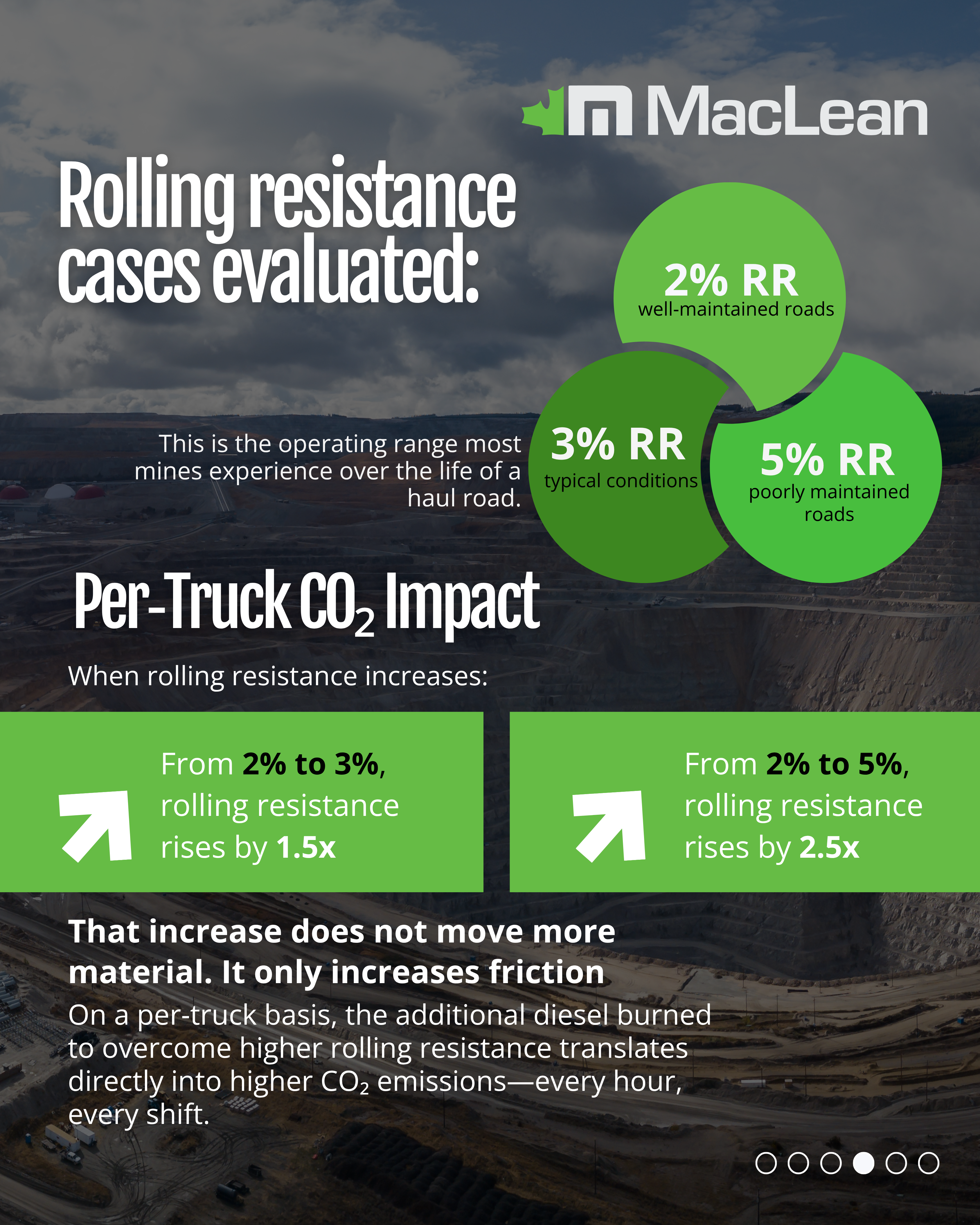
- ~2% rolling resistance → well-maintained roads
- ~3% rolling resistance → average conditions
- ~5% rolling resistance → poorly maintained roads
That difference may seem minor, but the impact is anything but:
- Moving from 2% to 3% = 1.5x increase in resistance
- Moving from 2% to 5% = 2.5x increase in resistance
This increase results in:
- Higher fuel
- Slower haul speeds
- Increased tire and component wear
- Reduced overall productivity
In other words, poor roads silently drain performance across the entire operation.
The “Phantom Truck” Effect
One of the most powerful ways to understand rolling resistance is through what can be called the “phantom truck” effect.
As resistance increases, emissions rise, but production stays the same.
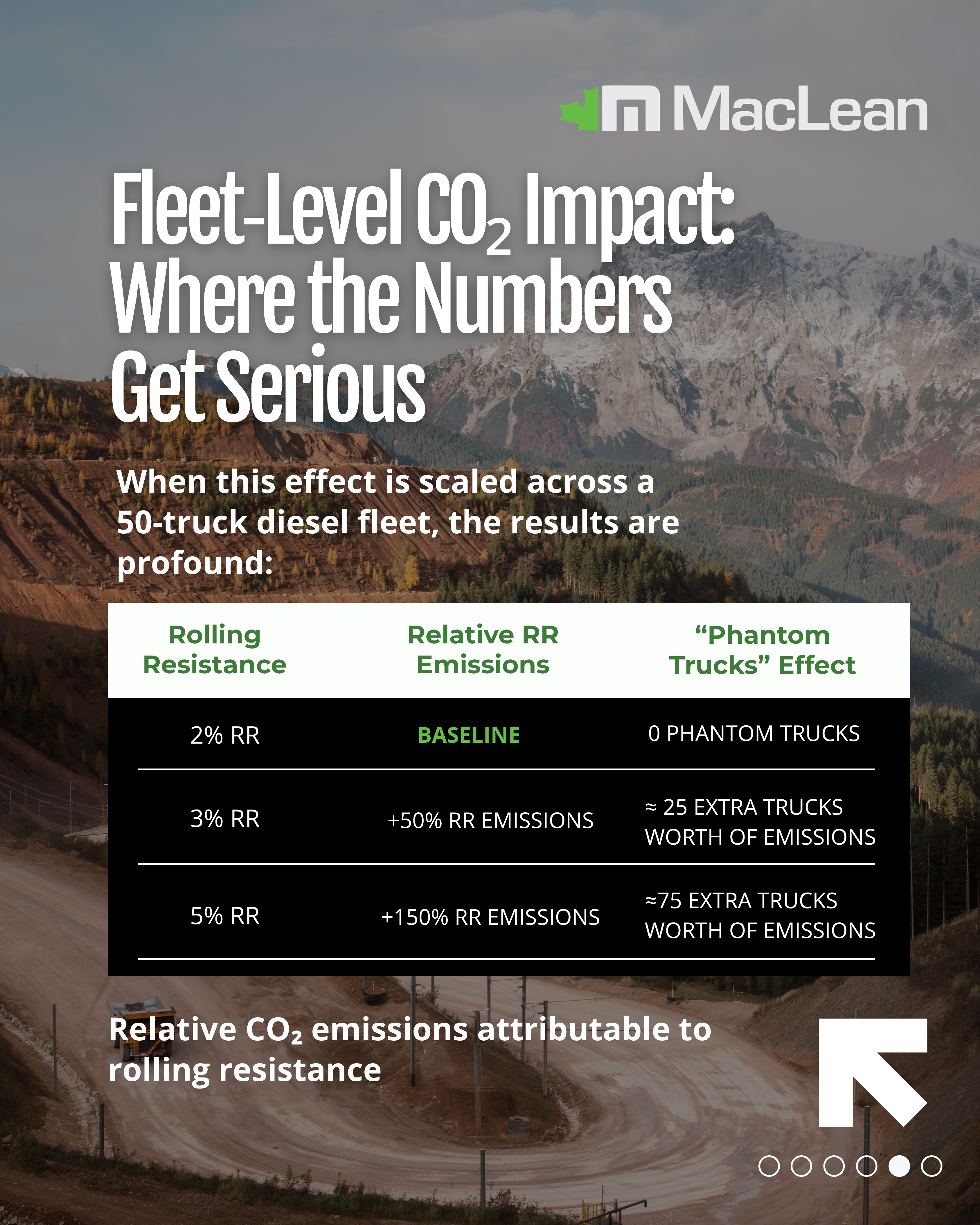
In a modeled 50-truck fleet:
- At 3% rolling resistance, the operation produces additional emissions equivalent to adding ~25 extra trucks
- At 5% rolling resistance, that number grows to ~75 extra trucks
These phantom trucks don’t show up on your asset lists, don’t move material, and don’t generate revenue, yet they contribute fully to your emissions footprint.
Electrified Fleets Feel It Even More
If your fleet is diesel, poor roads quietly increase fuel use. But with electric trucks, you notice the impact immediately. Higher rolling resistance can lead to:
- Reduced battery range
- More frequent charging cycles
- Higher demand on your electrical infrastructure
- Higher total cost of ownership
As your mine embraces electrification, maintaining high-quality haul roads becomes critical to keeping operations running efficiently.
Why Graders Are More Strategic Than You Think
If rolling resistance is the problem, haul road quality is the lever, and graders are the tool that controls it.
Well-maintained roads:
- Reduce friction
- Improve truck efficiency
- Lower emissions
- Extended equipment life
And yet, graders are often considered secondary equipment rather than strategic assets.
In reality:
A grader doesn’t just maintain roads, it directly impacts fleet-wide efficiency and sustainability performance.
Diesel Graders Are Good, But Not Best for Locking in CO2 Emissions Savings from Improved Roads
Graders are the tool of choice for most mines to manage the quality of their haul roads, which as we’ve shown above can have a big impact on the CO2 emissions profile of the fleet. However, diesel graders have a trade off in that they also produce their own CO2 emissions, which gives back some of those savings. What if you could achieve those improved roads while creating no additional CO2 emissions in the process?
The MacLean GR8 EV Grader
Zero emissions solutions, such as electric graders, are emerging as key enablers of both efficiency and decarbonization.
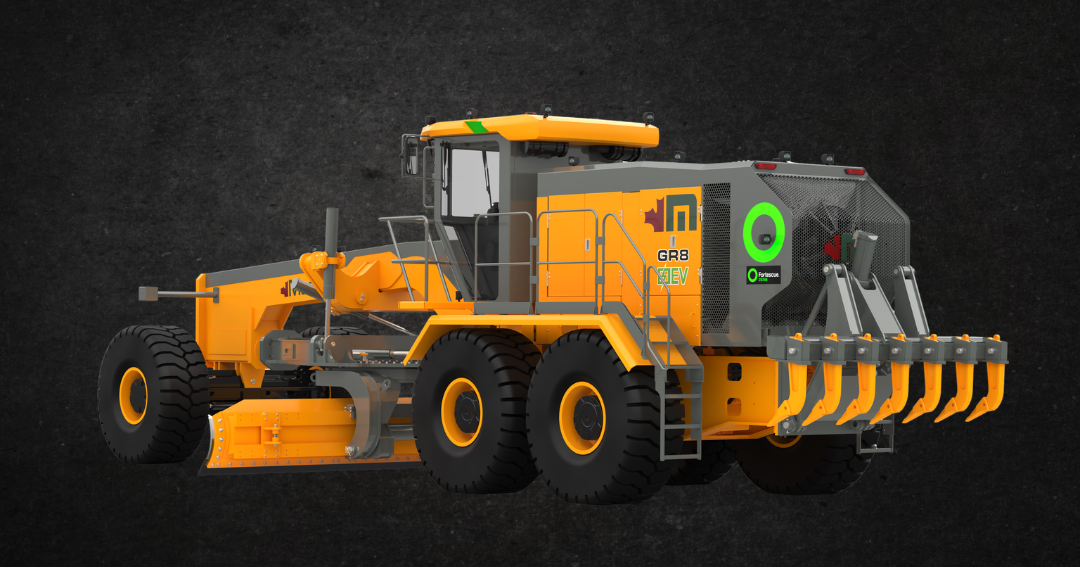
That’s why we developed the MacLean GR8 EV Grader. This 18 ft pit-class electric grader was designed for continuous surface mining operations. Unlike diesel conversions, it was engineered from the ground up to perform reliably in demanding environments.
Using the MacLean GR8 EV Grader can help you:
- Maintain smooth and consistent haul roads
- Reduce and control rolling resistance
- Reduce energy consumption across your haul truck fleet
- Lower operating costs
- Reduce CO₂ emissions for any piece of diesel equipment while contributing zero emissions itself
- Contributes no additional CO2 emissions from its own operation, ensuring you lock in those savings
The Bottom Line
Rolling resistance is a variable on every mine site that affects the CO2 emissions of the equipment on haul roads, and yet it is often overlooked as something that can be controlled and leveraged to avoid having “phantom trucks” generating extra emissions without any production benefit .
By improving haul road quality, operations can:
- Reduce fuel and energy consumption
- Increase productivity
- Extend equipment life
- Lower emissions at scale
By prioritizing good road maintenance practices with purpose-built graders, especially electric models, you can keep your operations efficient while advancing sustainability goals.
If you’d like to learn more about our GR8 EV Grader
______________________________________________________________________________________________
About the Author
David Jacques
Vice President – Surface Mining Vehicles
David has been with MacLean Engineering for more than 25 years, playing an instrumental role in leading key engineering initiatives and product development programs. Over the course of his career, he has contributed to the design and advancement of several innovative mining equipment solutions.
Today, David spearheads the expansion of MacLean’s Surface Mining Vehicle Division, helping drive the development of new technologies that support safer, more efficient, and lower-emission mining operations.

